The $2,000 Question: What New York Players Need to Know
By Admin User · · analysis · 7 min read
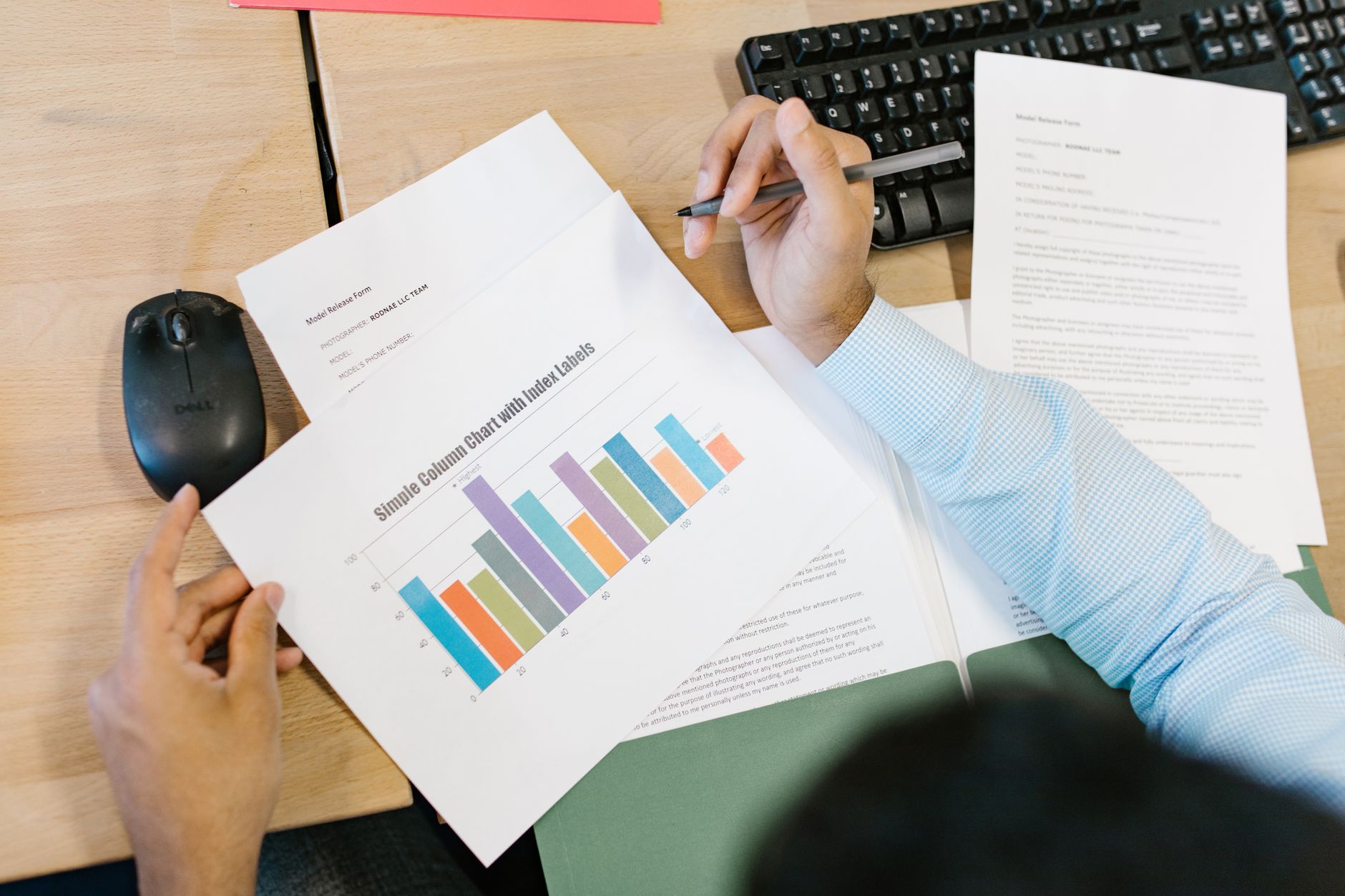
You're sitting in a New York deli, staring at a lottery ticket, wondering if there's a smarter way to pick numbers. Maybe you've seen the ads promising AI-powered predictions or "historical data analysis" that guarantees better odds. You're thinking: Is there actually something to this, or am I just throwing $2,000 at snake oil?
That's the exact question data-oriented players are asking in 2026, and the answer is more complicated than the marketing materials suggest. Let's dig into what the numbers actually tell us—and what they don't.
📈 Analyst's Take: The data tells an interesting story here. While correlation doesn't equal causation, these patterns are worth noting for context. Let me break down what the numbers actually show...
The Promise vs. The Reality of Lottery Analysis Tools
Machine learning tools are legitimately changing how iGaming software development works. Developers are using these systems to improve gameplay mechanics, tighten security monitoring, and streamline development workflows. That part is real. The technology exists, it's sophisticated, and it's being deployed across the gaming industry.
But here's where things get murky: several lottery prediction services are now marketing themselves as "AI-powered" systems that can identify statistical patterns in draw history to help you pick better numbers. Products like Lotto Champ and Lottery Maximizer are making bold claims about accuracy and number-selection algorithms. The catch? Independent reviews are raising questions about what consumers should actually verify before buying.
What the Data Actually Shows: Hot Numbers, Cold Numbers, and Statistical Noise
Let's talk about hot number strategy and cold number analysis—two approaches that sound scientific but require careful interpretation. When you analyze lottery draw history, you'll notice certain numbers appear more frequently over a given period. These are your "hot" numbers. Others lag behind—your "cold" numbers.
Here's the problem: in a truly random system, these patterns are statistical noise. If you flip a coin 100 times and get 58 heads, that doesn't mean the coin is biased toward heads. It means you ran a small sample. Lottery drawings work the same way. A number that's "overdue" isn't actually more likely to appear next—each draw is independent.
That said, there's value in analyzing lottery patterns for one specific reason: understanding variance. If you track Powerball trend analysis over years, you can see how jackpots cluster, when participation spikes, and how rollovers affect ticket sales. This won't help you predict the next winning number, but it might help you decide when to play based on expected value calculations.
The $2,000 Decision: What to Verify Before Buying Prediction Systems
Let's say you're in New York and you're considering dropping $2,000 on a lottery analysis subscription or software package. What should you check first?
- Refund Terms: Some services offer 60-day money-back guarantees. Read the fine print. Are there usage limits? Do you need to provide "proof" you followed their system? What's the actual refund process?
- Accuracy Claims: If a service claims "87% prediction accuracy," ask: accuracy at what? Predicting that at least one number will match? That's not impressive—random selection does that often. Predicting all six numbers? That would be revolutionary. The devil is in the definitions.
- Algorithm Transparency: Services like Lottery Maximizer mention a "Quantum+ Algorithm." What does that actually mean? Is it using quantum computing (expensive and rare) or is "quantum" just marketing jargon? If they won't explain their methodology, that's a red flag.
- Independent Verification: Look for third-party reviews, not testimonials on the company's website. Check forums where real players discuss results. If everyone's experience is glowing and identical, you're reading curated marketing.
What Data-Driven Players Should Actually Focus On
If you're serious about improving lottery odds using data, here's where to put your energy:
- Expected Value Calculations: Track jackpot history and ticket sales. When jackpots roll over multiple times, the expected value of a ticket increases. There are specific thresholds where playing becomes mathematically less terrible.
- Number Distribution Strategy: Use a free lottery number generator that ensures your picks are spread across the entire range. Most people pick birthdays (1-31), creating clustering. Spreading out reduces shared jackpot risk if you win.
- Pool Participation: Join or create a syndicate. This doesn't change the randomness, but it increases your ticket volume without proportionally increasing individual cost. Track your pool's performance over time.
- Bankroll Management: Set a fixed entertainment budget. If you're spending $2,000, spread it across multiple drawings rather than dumping it all at once. Use a jackpot calculator to understand post-tax, lump-sum values.
The Canadian Context: What's Happening North of the Border
Interestingly, while New York players are debating $2,000 analysis tools, Canadian players are seeing a surge in online casino options with instant payouts. Reviews of the top five online casinos in Canada for 2026 focus on bonuses, game variety, and withdrawal speed—not prediction algorithms.
So what does this mean for you?
Why does this matter? Because it shows where the gaming industry is actually innovating. Machine learning is improving user experience, fraud detection, and payout processing. It's making systems faster and more secure. But it's not cracking the code on random number generation, because that code can't be cracked.
A Real Example: Pattern Analysis in Practice
Let's walk through what lottery pattern analysis actually looks like when done correctly. Say you're analyzing Mega Millions AI predictions (or more accurately, historical Mega Millions data).
You pull 1,000 drawings. You notice that the number 7 has appeared 89 times, while the number 42 has appeared 71 times. Your first instinct might be: "7 is hot, I should play it." But here's the statistical reality: with 1,000 drawings of 5 numbers from a pool of 70, each number should appear roughly 71.4 times on average. Both 7 and 42 are within normal variance.
Now, if 7 had appeared 150 times? That would be suspicious. You'd want to investigate whether there's a mechanical bias in the drawing machine. But 89 vs. 71? That's just noise.
The difference between data analysis and pattern obsession is knowing when variance is meaningful and when it's just randomness doing its thing.
The Bottom Line: Spend Smart, Play Informed
If you're a data-oriented player in New York considering a $2,000 investment in lottery analysis tools, here's what you need to remember: the technology behind these systems is real, but the application to random lottery drawings is fundamentally limited. Machine learning excels at finding patterns in non-random data—user behavior, market trends, security threats. It struggles with true randomness because there's nothing to learn.
That doesn't mean data analysis is worthless. Understanding winning number patterns (or lack thereof), tracking jackpot cycles, calculating expected value, and managing your bankroll are all smart uses of analytical thinking. But they won't predict the next drawing.
The lottery is entertainment with a mathematical edge that always favors the house. If you play, play because you enjoy it—not because you think you've found a system that beats randomness. And if you're going to spend $2,000, make sure you're getting something real in return: education, tools that help you manage your play, or at minimum, a rock-solid refund policy.
Because at the end of the day, the only guaranteed winner in lottery prediction services is the person selling them.
📊 Analysis Note: This analysis is based on historical lottery data and statistical methods. While we strive for accuracy, statistical analysis cannot predict random events. All lottery draws are independent, and historical patterns do not guarantee future outcomes. This content is for informational purposes and should not be used as the sole basis for lottery play decisions.